An essential part of bearing repair is correctly diagnosing the root of the problem. We explore the most commonly identified causes of damage for anti-friction bearings, including cylindrical, spherical, tapered, and ball designs, taking you a step closer to solving your bearing maintenance issues. Assuming the application is correct to begin with, maximising longevity means bearings must be properly installed, lubricated and maintained—poor operating environments. Exceptionally moist or contaminated areas and improper handling practices invite premature bearing failure. When a bearing fails, it is essential to determine the exact cause so that appropriate adjustments can be made.
VIDEO – Wheel bearing diagnostices – 12 min
According to a recent study, up to 80 percent of bearing failures are caused by improper lubrication. This includes insufficient lubrication, use of improper lubricants, or excessive temperatures that degrade the lubricant.
Each bearing system must be adequately engineered for the proper lubricant amount, type, grade, supply system, viscosity, and additives. Selection should be based on history, loading, speeds, sealing systems, service conditions, and expected life. Without proper consideration of these factors, bearing and application performance may be underwhelming.
The following section outlines the progressive levels of bearing damage caused by inadequate lubrication:
Level 2: Scoring and peeling
Level 3: Excessive roller end heat
Inadequate lubricant film results in localised high temperatures and scoring at the large ends of the rollers.
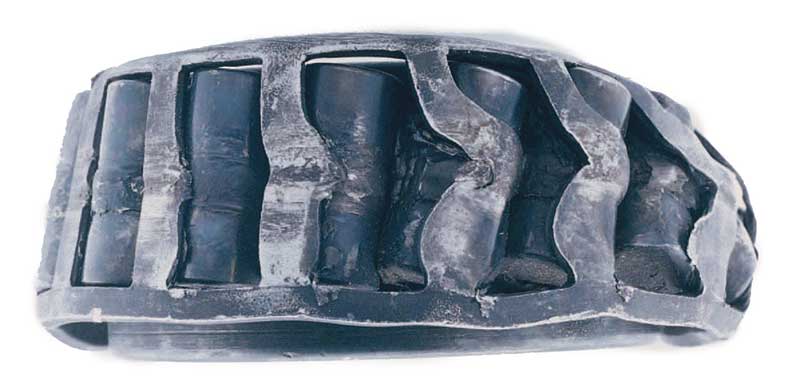
Level 4: Total bearing lockup
High-localised heat produces metal flow in bearings, altering the original geometry and the bearings’ material. This results in skewing of the rollers, destruction of the cage, metal transfer, and complete seizure of the bearing.
False brinelling, elliptical wear marks in an axial direction at each ball position with a bright finish and sharp demarcation, often surrounded by a ring of brown debris, indicate excessive external vibration. A small relative motion between balls and raceway occurs in non-rotating ball bearings that are subject to external vibration. When the bearing isn’t turning, an oil film cannot be formed to prevent raceway wear. Wear debris oxidises and accelerates the wear process. This is corrected by isolating bearings from external vibration and using greases containing anti-wear additives such as molybdenum disulfide when bearings only oscillate or reverse rapidly, as in actuator motors. Rapid movement of the balls in a raceway while equipment is idle wears away at the lubrication. In addition, a lack of rotation in the bearing does not allow fresh lubricant to return to the spot. Both of these conditions result in false brinelling.
Brinelling occurs when loads exceed the elastic limit of the ring material. Burnell marks show as indentations in the raceways, which increase brinelling vibration (noise). Severe brinell marks can cause premature fatigue failure. Any static overload or severe impact can cause brinelling. Brinelling from improper bearing assembly and disassembly happens when a force is applied against the unmounted race. When mounting a bearing on a shaft with a tight fit, pushing the outer race will exert an excessive thrust load and bring the rolling elements into sharp contact with the race, causing brinelling. Hefty impact loads can also result in the brinelling of the bearing races or even fracture the races and rolling elements. Examples include using hammers to remove or install bearings, dropping or spiking assembled equipment, and pressing a bearing onto a shaft by applying force to the outer ring. Install bearings by applying force only to the ring being pressed.
In most instances, bearings should be mounted with a press fit on the rotating ring. A number of conditions can cause denting, wear, cracked rings, high operating temperatures, early fatigue, and premature failure of bearings. These include mounting bearings on shafts by applying pressure or blows to the outer race, mounting bearings into housing by pressing on the inner ring, loose shaft fits, loose housing fits, excessively tight fits, out-of-round housings, and a poor finish on the bearing seat.
Misalignment will shorten bearing life depending on the degree of misalignment. To achieve longer life, the seats and shoulders supporting the bearing must be within the specified limits set by the manufacturer. If the misalignment exceeds those limits, the load on the bearing won’t be distributed along the rolling elements and races as intended, which may result in overheating and separator failure. A worn path that is not parallel to the raceway edges of the non-rotating ring should be noted.
Typical causes of misalignment include:
Moisture, acid, low-quality or broken-down grease, poor wrappings, and condensation from excessive temperature reversals can cause abrasive corrosion on the finely finished surfaces of ball and roller bearings. Look for red and brown stains or deposits on rolling elements, raceways, or cages, as well as increased vibration followed by wear, an increase in radial clearance, or loss of the preload.
Arcing occurs when an electric current that passes through a bearing is broken at the contact surfaces between the races and rolling elements. Each time the current is broken while passing between the ball or roller and the race, it produces a pit on both parts. Eventually, fluting develops. Causes of arcing include static electricity from charged belts or processes that use calendar rolls, faulty wiring, improper grounding, welding, inadequate or defective insulation, loose rotor windings on an electric motor, and short circuits. Brownish marks may be observed parallel to the axis on a large part of the raceway or covering the entire raceway circumference.
Spalling is often the result of overloading, an excessive preload, tight inner-ring fits, and using the bearing beyond its calculated fatigue life. Fatigue can be indicated by the fracture of running surfaces and subsequent removal of small, discrete particles of material from the inner ring, outer ring, or rolling elements. Spalling is the pitting or flaking away of bearing material. This primarily occurs in the races and rolling elements. Spalling is progressive and will spread with continued operation. A noticeable increase in vibration and noise always accompanies it. The many types of primary damage referenced throughout this guide may eventually deteriorate into a secondary spalling damage mode. Three distinct modes are classified:
Overheating is generally the result of excessive operating temperatures and improper lubrication. High temperatures can cause grease to bleed (purge the oil), which reduces the lubricant’s efficiency. In elevated temperature conditions, oxidation can lead to the loss of lubricating oils from the grease, leaving a dry, crusty soap that can seize the bearing. Higher temperatures also reduce the hardness of the metal, causing early failure. Note any discoloration of the rings, rolling elements, and cages. In extreme cases, the bearing components will deform. Higher temperatures can also degrade or destroy the lubricant.
Another common cause of failure is putting too much load on a bearing. You may see heaving rolling-element wear paths, evidence of overheating, and widespread fatigue areas.
Improper storage exposes bearings to dampness and dust. Storing bearings in excessively high temperatures can also degrade a grease’s shelf life, so always check with the grease manufacturer for storage specifications. Handling bearings by opening boxes and tearing wrappings prematurely can let in dirt and expose bearings to corrosive elements. Watch for dampness and temperatures that can cause rust and uncovered bearings in a storage area.
A tight fit can be caused by excessive loading of the rolling element when interference fits exceed the radial clearance at operating temperatures. Micro-motion between fitted parts where the fits are too loose in relation to the acting forces may result in a loose fit. For a tight fit, look for a heavy rolling-element wear path in the bottom of the raceway, overheating, or an inner-ring axial crack. For a loose fit, note any fretting (generation of fine metal particles), which leaves a distinctive brown colour. Wear at the fitting surfaces can cause noise and runout problems.
Foreign material (i.e., sand, dust, water, fine metal) in the bearing can cause excessive abrasive wear. In tapered bearings, the roller ends and cone rib will wear to a greater degree than the races. This wear causes increased end play or internal clearance, which can reduce fatigue life and create misalignment in the bearing.
Large particle contamination wedged in the soft cage material can result in grooving.
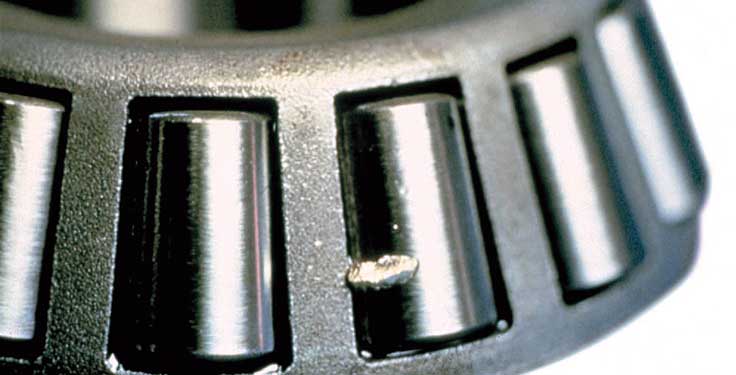
Hard particles (i.e., metal chips, dirt) rolling through the bearing may cause pitting and bruising of the rolling elements and races. These particles can travel within the lubricant, through the bearing, and eventually bruise (dent) the surfaces. The raised metal around the dents acts as surface-stress risers to cause premature spalling and reduce bearing life.
Etching, or corrosion, is among the most severe problems anti-friction bearings encounter. The high degree of surface finish on races and rolling elements makes them more susceptible to corrosion damage from moisture and water. Etching often results from condensate collecting in the bearing housing from temperature changes. Moisture can get in through damaged, worn, or inadequate seals. Improperly washing and drying bearings can also cause considerable damage.
Bearings, new or used, should always be stored in a dry area in their original packaging to reduce the risk of static corrosion.
Excessive preload can generate a large amount of heat and cause damage similar in appearance to inadequate lubrication. Often, the two causes may be confused. So, it is essential to check the bearing thoroughly to determine the root problem. A lubricant that’s suitable for regular operation may be unsuitable for a heavily preloaded bearing, as it may not have the film strength to carry the higher loads.
Excessive end play results in a tiny load zone and excessive looseness between the rollers and races outside the load zone. This causes the rollers to unseat, leading to skidding and skewing as the rollers move into and out of the load zone. This movement creates scalloping in the cup race and can also cause cage wear.
Impact damage is one of the most common causes of vehicle bearing damage. Wheels striking potholes, speed bumps, and curbs are common sources of ball-bearing damage. These episodes increase bearing wear and shorten the lifespan of the bearings.
Overloading a vehicle with excessive weight can damage wheel ball bearings. If the vehicle’s weight exceeds the recommended load on the bearings, the bearings can deform and distort the bearing race.
Low-quality wheel bearings will fail prematurely. Bearings are under constant high pressure and need to be manufactured to the highest standards to function correctly and withstand their substantial workload.
Care must be taken when handling and assembling bearings so the rolling elements, race surfaces, and edges aren’t damaged. Deep gouges in the racing surface or battered and distorted rolling elements will make metal rise around damaged areas. High stresses will occur as the rolling elements go over these surfaces, creating premature, localised spalling.
Careless handling and improper tools during installation may damage cages or retainers. Cages and retainers are usually made of mild steel, bronze, or brass and can be easily damaged. In some applications, environmental and operating conditions can cause fractured cages or retainers. If this occurs, contact a service engineer.
Careless handling or damage caused when driving outer races out of housings or wheel hubs can create burrs or high spots in the outer race seats. If a tool gouges the housing seat surface, it will leave raised areas around the gouge. If these high spots are not scraped or ground down before reinstalling the outer race, they will transfer through the outer race and cause corresponding high spots in the outer race’s inside diameter. Stresses increase when the rolling elements contact this high area, which can shorten service life.
Always follow the manufacturer’s recommended bearing fit to ensure bearings perform correctly. Generally, the bearing race – where the rotating load exists – is applied with a press or tight fit. An example is a wheel hub, where the outer race should be applied with a press fit. The races on a stationary axle would generally be applied with a light or loose fit. Where the shaft rotates, the inner race should generally be applied with a press fit, and the outer race may be applied with a split fit or even a loose fit.
For a specific application or machinery, these faults and their identification methods may vary. Regular inspection, proper maintenance, and adherence to manufacturer guidelines can help prevent these issues and ensure the longevity and efficiency of bushes and bearings.
Suspension bushes can encounter various problems over time. Identifying and addressing these common issues is crucial for maintaining optimal vehicle performance. Let’s look at the common suspension bush problems that can be avoided if you know the signs:
One prevalent problem with suspension bushes is loose steering, which causes the vehicle to pull to one side. When these bushes wear or sustain damage, the steering system becomes less responsive. This also causes instability, especially at higher speeds, leading to erratic movements and undesirable vibrations. Identifying and rectifying worn or damaged bushes is crucial to restoring optimal steering control and ensuring a safer driving experience.
Soft or worn suspension bushes can significantly impact wheel alignment, resulting in rapid or irregular tire wear. These bushes play a vital role in maintaining proper alignment. Any compromise in their functionality can lead to uneven tire deterioration. However, you can use these tips to avoid tire cracking. This not only affects the longevity of the tires but also poses a potential safety hazard. Regular checks and timely replacement of worn bushes are essential to mitigate the risk of accelerated tire wear.
Suspension bushes contribute to the control arm’s oscillation during braking. When these bushes are in poor condition, the forward and backward movement of the control arm becomes erratic. This also affects the vehicle’s braking stability. Inconsistent braking, especially during sudden stops, can pose significant safety concerns. Addressing issues with suspension bushes promptly is crucial to ensure a consistent and secure braking system.
Worn suspension bushes compromise shock absorption, leading to reduced comfort and increased vulnerability of other engine components. These bushes play a crucial role in dampening vibrations and impacts from the road. Deterioration can result in a less comfortable ride. Furthermore, the increased stress on other vehicle components may contribute to premature failure.
Regular inspections and timely replacement of worn suspension bushes are essential for maintaining optimal vehicle performance and comfort. Also, for suspension maintenance, you must avoid these seven mistakes that damage a vehicle suspension system.
Knowing when to replace vehicle bushes is crucial for maintaining a vehicle’s performance, safety, and comfort. Several signs indicate that it’s time to consider replacing the vehicle bushes:
If you hear squeaks, thuds, or clunks coming from the suspension, it could indicate worn or damaged bushes. Unusual noises during driving are often a clear sign that the bushes need attention. However, if vehicle bushes are working fine, here are some more reasons why squealing noises are coming while driving.
An increased body roll, instability, or difficulty maintaining control may indicate worn or ineffective suspension bushes. If you notice changes in how your vehicle handles, it’s time to inspect them.
Bushes are essential in maintaining proper wheel alignment. Worn or misaligned bushes can cause uneven tyre wear. Regularly check your tyres for signs of uneven wear, as this may signal the need for bush replacement.
Inspect the bushes for visible signs of damage, such as cracks, tears, or deterioration. Damaged bushes may not provide adequate support and should be replaced promptly.
Excessive vibration felt through the steering wheel or the vehicle’s chassis can indicate worn suspension bushes. If you notice an increase in vibrations, especially during driving, it’s advisable to have the bushes inspected.
Consider your vehicle’s mileage and age as a preventive measure. High-mileage and older vehicles are more likely to experience wear and tear on suspension components, making regular inspections and potential replacements necessary.
A distinct clunking noise when driving over bumps or rough surfaces may suggest that the suspension bushes are no longer effectively absorbing shocks. In such cases, it’s prudent to have them inspected and replaced if needed.
If you notice a decline in ride comfort, with the vehicle feeling harsher or less smooth on the road, it could be a sign of worn suspension bushes. Replacing them can restore a more comfortable driving experience.